
Hoarding and Boarding
Site hoarding and emergency boarding to establish a defensible perimeter and secure vulnerable openings, installed to suit the site rather than a standard layout.
A damaged frontage, an exposed site boundary or a vacant unit with broken glazing becomes a security problem within hours, not days. Hoarding and boarding are usually brought in at exactly that point: access has to be controlled quickly, the risk has to be visibly reduced, and there is no room for a piecemeal response.
Andor Group installs hoarding and boarding across the south of England and nationwide, for live construction sites, refurbishment and strip-out works, and vacant commercial property.
They are two different jobs
Hoarding creates the boundary
Hoarding defines and reinforces the site line. It restricts unauthorised entry, improves public safety where the works sit close to a footway, and provides privacy and visual control. On a live project it is what makes access control possible at all: without a sound boundary, a gate is decorative.
Boarding secures the openings
Boarding protects vulnerable points in a building — broken windows, forced doors, failed shutters, openings created by strip-out or partial demolition. It is usually an immediate response to stabilise a risk before anything more permanent is decided.
In practice most clients need both. A vacant commercial building needs boarding to secure the structure and hoarding to hold the wider perimeter. A live site needs hoarding as standard and boarding at short notice after overnight damage or an attempted entry.
Why it matters beyond keeping people out
Deterrence is the obvious benefit: a properly secured site is harder to enter and less attractive to opportunists. The less obvious one is liability. If someone gets into an unsafe area, or an unsecured building becomes a focus for anti-social behaviour, the consequences run well past asset loss into delay, clean-up, insurance and reputation.
There is an operational point too, and it is the one most often missed. Badly planned temporary security creates friction. Deliveries get harder, access routes become unclear, and the site team ends up working around the provision instead of with it. Hoarding should reduce disruption, not add to it, which means it has to be set out against the delivery route and the access strategy rather than simply following the boundary.
On construction and refurbishment projects
What the right approach looks like depends on the site. On a city-centre scheme the public interface is tight and the hoarding has to work harder: standoff, anti-climb considerations, and a clean interface with the footway. On a larger or edge-of-town site the emphasis shifts to boundary integrity over a long perimeter, vehicle routes and after-hours exposure.
Boarding becomes necessary during the life of a project as well. Strip-out, partial demolition and phased handover all create temporary weak points, and an opening left unsecured for a weekend is the one that gets used.
Vacant and at-risk property
Vacant buildings carry a different set of pressures: trespass, squatting, fly-tipping, metal theft and arson risk. Broken glazing and insecure doors are the obvious weaknesses, but an intact building becomes exposed quickly if the perimeter is weak or there is no sign of active management.
Boarding gives immediate protection at the most vulnerable points; hoarding establishes standoff and supports containment. Response speed is the variable that matters most, because the longer a property stays exposed the more likely repeat incidents become. This usually sits within a wider vacant property protection arrangement, alongside patrols or monitored CCTV, rather than on its own.
How we build it
We install directly rather than subcontracting, which matters mainly because the person who surveys the site is accountable for what goes up.
The frame
Hoarding is only as good as what holds it up, and the frame is where cheap installations fail. We build on concrete posts where the ground can take them, or ballasted posts where it cannot — on a slab, over services, or anywhere digging is not an option. Either way the frame is designed to structural specification rather than put up by eye, because a hoarding line is a temporary structure carrying real wind load, and a run that blows over in February is a serious incident rather than an inconvenience.
The boarding
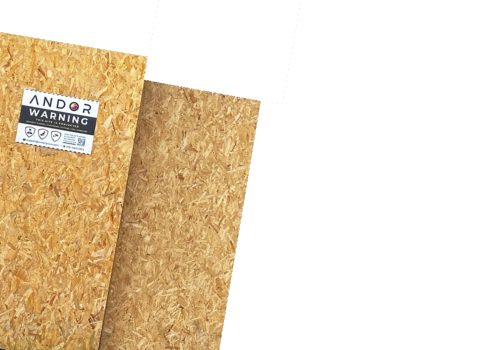
OSB as standard, which is robust, economical and straightforward to repair in sections when a panel is damaged rather than replacing a whole run.
The finish
Plain OSB is the baseline. From there it can be painted, or faced with printed material and applied branding, which on a public-facing site is worth doing: a hoarding line is often the largest thing your client or the local authority sees for the duration of the project, and a clean, branded frontage changes how the works are perceived by neighbours.
Printed finishes also do a security job. A hoarding that looks maintained and actively managed reads as a site somebody is paying attention to, which is the first thing anyone assessing an easy target looks for.
What good hoarding and boarding should include
The quality gap here is not visible until something goes wrong. Most suppliers can fit temporary barriers. What separates them is whether the installation reflects the actual site: where the gates sit relative to the delivery route, whether the boundary can be climbed from a skip or a neighbouring wall, how the line interacts with pedestrians, and whether it can be adapted as the project phases change.
It also matters whether anyone comes back. A perimeter degrades: panels are moved for deliveries, fixings loosen, and a gap opened on a Tuesday stays open. Where we also provide guarding or patrols, that drift is picked up as part of the routine rather than at the next inspection.
Licensing and accreditation
Andor Group holds ISO 9001, ISO 14001 and ISO 45001, certified for security guarding services, together with SafeContractor accreditation and SSIP approval under the Deem to Satisfy process, and is a Constructionline Gold member, having also completed Constructionline’s Social Value assessment. We work to BS 7499 for static site guarding and mobile patrol services, BS 10800 for the provision of security services, BS 7984 for keyholding and response services, and BS 7858 for security screening, with BPSS clearance where a contract requires it. Employer’s liability, public liability and professional indemnity insurance are each held at £10 million. Certificate numbers, scopes and expiry dates for every accreditation are set out on our accreditations page, and copies are available on request.
Common questions
How quickly can you board up an emergency?
Emergency boarding is a response job and we treat it as one. Tell us the location and what has failed and we will tell you honestly when we can be there, rather than quoting a headline time we cannot hold.
Do you do both hoarding and boarding, or just one?
Both, and they are frequently needed together on the same property — boarding to secure the structure, hoarding to hold the perimeter.
Can hoarding be adapted as the project changes?
Yes, and it should be planned on that basis. Phasing, changes to the delivery route and handover of completed sections all move the line, and a perimeter set out once for the whole programme usually stops matching the site by the second phase.
Will it work with our access and delivery arrangements?
That is exactly what it needs to be set out against. Gate positions, vehicle swept paths and pedestrian routes should determine the line, not the other way round.
Do you check the perimeter after installation?
Where we also provide guarding or patrols, perimeter condition is part of the routine check and reported with the visit. On installation-only work we can arrange periodic inspection if you want it.
Can you secure a property we do not occupy yet?
Yes. Empty buildings between purchase and works, or between contractor demobilisation and occupation, are among the most commonly under-protected and the cheapest to cover.
Secure a site or property
If you have an exposed boundary, a damaged building or a project about to start, tell us what the site looks like and we will set out what it needs. See the full range of construction site security services, or get in touch on 020 4602 3974 or at sales@andorgroup.com.
What our hoarding and boarding covers
Perimeter hoarding. A defined, defensible site line that makes access control possible and keeps the public clear of the works.
Emergency boarding. Rapid securing of broken glazing, forced doors, failed shutters and openings created by strip-out or damage.
Set out against the site. Gate positions, delivery routes and pedestrian movements determine the line, so security supports the programme instead of obstructing it.
Adapted through the phases. The boundary moves as the project does, rather than being set once and left to stop matching the site.
Vacant property response. Immediate protection at the vulnerable points, within a wider containment approach for empty buildings.
Maintained, where we also guard. Perimeter condition checked as part of the patrol routine, so a panel moved for a delivery does not stay moved.
Values we live by
Collaboration with our partners
We work closely with our partners, fostering strong relationships to deliver tailored and effective security solutions.
Passion for results
Our team is driven to achieve exceptional results, ensuring every project meets the highest standards of safety, efficiency, and success.
Constantly improving
We embrace innovation and feedback, continuously enhancing our services to stay ahead in the ever-evolving security industry.