
Warehouse and Logistics Security
Security for warehouses and distribution sites, covering stock loss, gatehouse control and the vehicle movements that make both harder.
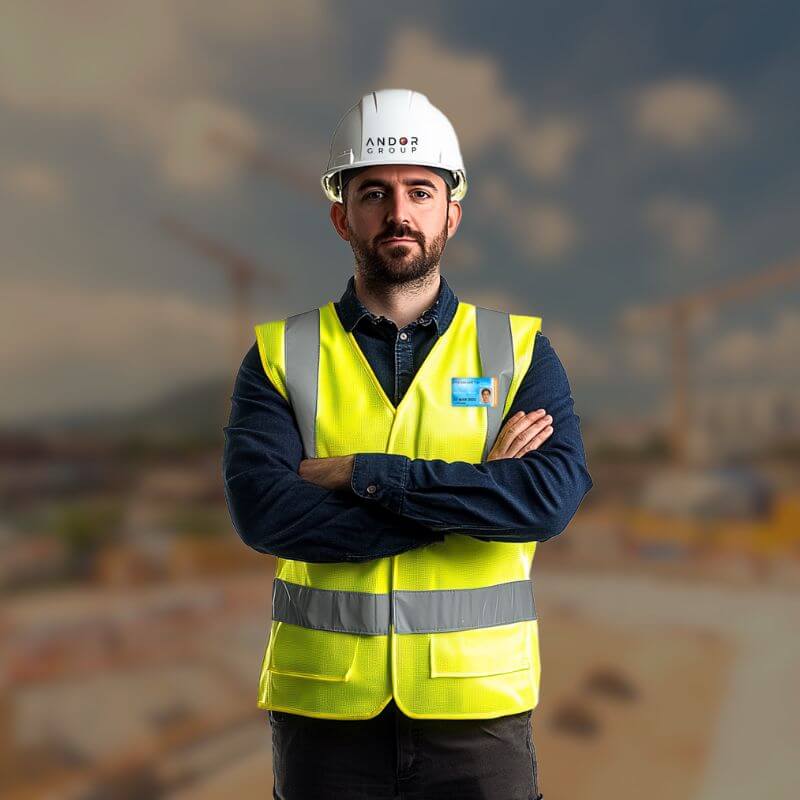
A warehouse is a building full of portable, resaleable goods with vehicles going in and out of it all day. The security problem is not really about the perimeter — it is about the gate, the loading bay and the records.
Andor Group provides gatehouse cover, officers, dog handler teams and monitored CCTV to warehouses, distribution centres and logistics sites across Hampshire and the south of England.
Stock loss is mostly a process problem
Losses at a distribution site rarely look like a break-in. They look like a discrepancy at stock take, traced back weeks later to a period nobody can reconstruct.
The reason is that most warehouse loss happens through the loading bay during working hours, in the gap between what was loaded and what was recorded. Vehicles arriving unbooked, drivers walking unaccompanied, pallets moved to the wrong bay, and no independent check on what actually left.
Which is why gate control does more for stock loss than perimeter security does. If what enters and leaves is checked against a booking by somebody who does not work for the loading team, the gap closes.
The gatehouse
A staffed gatehouse is the single most effective measure on most distribution sites. It checks vehicles in against the booking, verifies drivers, controls which bay they go to, and records what left and when.
Ours run on our own delivery management system, which matters here more than in construction: the value is that the booking is enforced by the person at the barrier rather than sitting in a transport office. Outbound movements are recorded on the same system, which is the half most sites never log at all.
More on the role in site gatemen.
Vehicle movements and the people among them
A logistics yard is one of the more dangerous working environments there is: HGVs reversing, tight turning circles, pedestrians crossing to offices and welfare, and drivers who do not know the site.
Where movements are heavy, marshalling matters as much as security, and the two are often the same person’s job. Segregation, controlled reversing and a defined pedestrian route are the basics, and enforcement is what makes them real. Our traffic marshals and traffic management pages cover it in detail.
Out of hours
At night the site inverts: no vehicles, no staff, and a large building holding stock. The risks become forced entry to the yard, roof access, theft of fuel and metal from the service areas, and trailers left loaded.
Cover is usually monitored CCTV with a response arrangement, patrols, or a static officer where the stock justifies it. Dog handler teams are asked for more often in this sector than any other, because a large yard with multiple buildings is exactly the ground a handler and dog can search quickly and a single officer cannot. See security dog handlers.
Agency staff, peaks and the insider problem
Distribution sites flex their headcount hard, and at peak a large proportion of the people on site may have started that week. That is not a character judgement, it is a control problem: induction is compressed, supervision is thinner, and nobody knows everyone by sight.
Two things follow. Access control matters more at peak, not less, even though that is when the pressure to wave people through is highest. And the gate record becomes the only reliable account of who was on site, because the informal knowledge that covers a stable team is absent.
Most sites already know their loss rises at peak. Fewer connect it to the fact that their controls loosen at exactly the same moment.
Which services apply
- Gatehouse and access control — the highest-value measure on most sites
- Delivery management — bookings enforced at the barrier, inbound and outbound recorded
- Security officers — daytime presence and overnight static cover
- Dog handler teams — searching large yards and multi-building sites
- CCTV and monitoring — yard, loading bays, roof access and approaches
- Keyholding and alarm response — attendance without calling a duty manager out
What a typical arrangement looks like
A single distribution unit usually runs gatehouse cover across operating hours and monitored CCTV overnight with a response arrangement. A multi-building site adds patrols or a handler team overnight. A site with a stock loss problem starts with the gate and the records rather than with more cameras.
We survey first: the number of access points, the booking process and who controls it, where vehicles queue, the yard layout and roof access, operating hours, and what the loss pattern actually looks like.
Reporting
Gate records, patrol attendance and incidents are logged through HitDesk with times and locations, available to you directly. On a distribution site the gate record is the operationally useful part: it reconciles against your own movement data, and a discrepancy that shows up in both is a fact rather than a suspicion.
Where we work
We cover warehousing, distribution and logistics sites across Hampshire and the wider south of England, including Southampton, Portsmouth, Basingstoke and Andover, and work nationally for operators running several sites.
Common questions
Will security stop stock loss?
Gate control and records will reduce it, because most loss goes out through a documented movement that was never independently checked. More cameras on the perimeter usually will not, which is why we start with the gate.
Do you provide dog handler teams for warehouse sites?
Yes, and this is the sector that asks for them most. A handler and dog clear a large yard or a multi-building site far faster than officers on foot, and the deterrent effect on a yard with a persistent problem is immediate.
Can your gatehouse work with our transport system?
We run our own delivery management system at the barrier, and we agree how it reconciles with your booking or transport management system before mobilisation rather than afterwards.
Do your officers marshal vehicles as well?
On many sites the same person does both. Where movements are heavy the roles conflict and you need both, because a marshal cannot leave a reversing HGV to check a delivery note.
What cover do we need overnight?
It depends on the stock, the yard and whether anything has happened. Monitored CCTV with a response arrangement suits most sites; high-value stock or repeated incidents justify a static officer or a handler team.
Can you cover a peak period only?
Yes. Seasonal peaks, stock takes and site moves are common short-term requirements and we cover them without a standing contract.
Further reading
8 best ways to protect warehouses from theft · Construction logistics support services · Site logistics support guide
Discuss your site
Tell us the yard layout, the booking process and what the loss pattern looks like. See our security services or get in touch on 020 4602 3974.
What we provide to warehouse and logistics sites
Staffed gatehouse. Vehicles checked against the booking, drivers verified, bays controlled, and what left recorded — the highest-value measure on most distribution sites.
Outbound recorded, not just inbound. The half most sites never log, and where most loss actually goes.
Dog handler teams. Large yards and multi-building sites searched quickly, and an immediate deterrent where there is a persistent problem.
Vehicle and pedestrian segregation. Marshalling where movements are heavy, enforced rather than assumed.
Overnight cover. Monitored CCTV with a response arrangement, patrols, or static officers where stock justifies it.
Records that reconcile. Gate and patrol data timestamped through HitDesk, so a discrepancy can be checked against your own movement records.
Values we live by
Collaboration with our partners
We work closely with our partners, fostering strong relationships to deliver tailored and effective security solutions.
Passion for results
Our team is driven to achieve exceptional results, ensuring every project meets the highest standards of safety, efficiency, and success.
Constantly improving
We embrace innovation and feedback, continuously enhancing our services to stay ahead in the ever-evolving security industry.